Jan 29, 2020

Shopping Around The Corner In Allentown


Needless to say that when I was a kid downtown Allentown was bustling. There was nothing that you couldn't find or buy on Hamilton Street. The mercantile district was so vigorous that it could support stores and businesses two blocks out in either direction. Across the street from the Earl Theater on 8th Street, the Look Steak Shop did a hardy business. Also in that block was Stangl's Jewelry, Goodin's Optical and a hearing aid business.

It is a little difficult to recognize those businesses in the photograph above. While the city and newspaper was lauding the progress of the upcoming arena, I was documenting the demolition of the city's history. The buildings were not the only victims. The last group of owner operators were also roughed up by the city...I also documented that.

I apologize to those of you who are happy season ticket holders at the new arena. While you can read about the progress at numerous other sites, including the city web page, City Center Realty, and The Morning Call, this blog commenorates the past.

Jan 28, 2020

The Demolition of Allentown


In addition to three major local department stores, Allentown also sported three national chain five and dimes. Two of these emporiums stood side by side on the 700 block of Hamilton Street; F.W. Woolworth and McCrory. Those discount stores of their day sold everything, including souvenirs of Allentown and even Hamilton Street. The large buildings remained intact all these decades, still hosting national chains. Although Family Dollar and Rite Aid have other locations in Allentown, their demolition closes the chapter on Allentown's retail history. The two photographs were taken from the same location, sixty years apart. Click on images to enlarge.


reprinted from February of 2012

Jan 27, 2020

No Damn Molovinsky Letters


Early last week I submitted the following letter to the Morning Call.
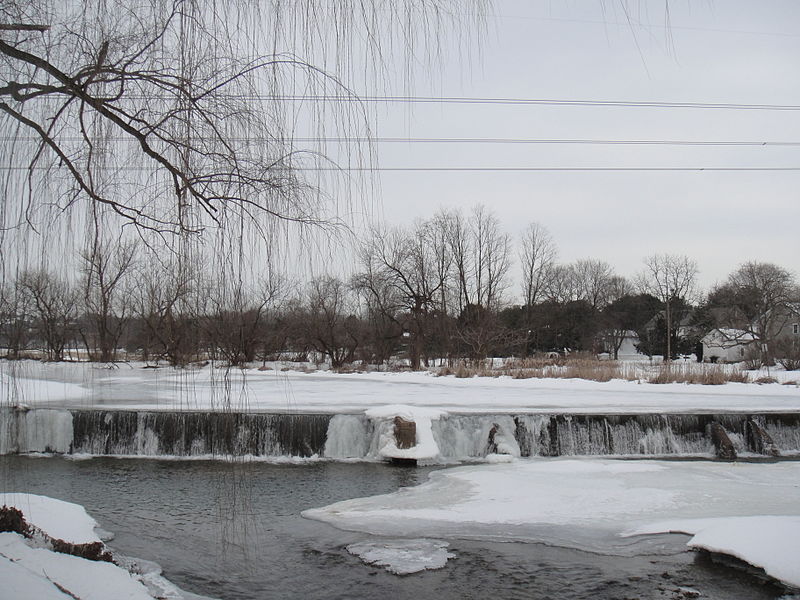
I read with great amusement South Whitehall Commissioner Tori Morgan's statement that placing an Open Space referendum on the ballot is a "fantastic idea". Ms. Morgan permitted the Wildlands Conservancy to contest the condition of Wehr's Dam with the state. That inappropriate interaction has complicated fulfilling the 2016 referendum that was meant to preserve that iconic structure. A referendum doesn't mean much if the elected officials are not sincere about following through with the voter's wishes.                      Michael Molovinsky 
The last letter of mine published by The Morning Call was in October of 2016, prior to the Wehr's Dam referendum. At the time, it took me two weeks to persuade the paper to publish the letter. The letters' editor refused, but I went over his head to the newly appointed publisher assigned by the Tribune Corporation. While the paper solicits self serving public relations patter by our elected and appointed officials, it censures citizen protest.

Jan 24, 2020

J. Molovinsky, Part 3, Wenz Company

This past weekend there was an auction at the former Wenz Company monument factory in the 1900 block of Hamilton Street. This facility has played several parts in Allentown's history, besides having produced thousands of tombstones. Enormous blocks of granite still remain from when it was the last stop on the Quarry Barber railroad branch line. Sculptures remain from the Phil Berman era, when artists used the Wenz equipment for monumental art. lastly, there are hundreds and hundreds of old tombstones, which were replaced over the decades, in local cemeteries with replacement markers. As mentioned in Part 1 of this post series, part of an old tombstone led me to discover my great grandmother's grave on Fountain Hill. That sculpture was made at Wenz, and Jennie Molovinsky's original stone also lies at Wenz's.

My grandfather came to Allentown as a young man in 1891. After working and saving for a number of years, he brought his parents over from the Old Country. The former synagogue on 2nd. Street had just acquired their cemetery off Fullerton Avenue when his mother died. Jewish tradition dictated that a man was the first burial in a new cemetery, so she was buried in an old Jewish Cemetery, on Fountain Hill. Several years later her husband, my great grandfather, was killed while being robbed on Basin Street. He is buried on Fullerton Avenue.

reprinted from June of 2014

Jan 23, 2020

Jennie Molovinsky Was A Quiet Neighbor


For nearly a hundred years the Wenz Memorial Company had a tombstone factory at 20th and Hamilton.  Their parcel extended from Hamilton Street back to Walnut Street, across from the home of former mayor Joe Daddona.   Years ago, large granite slabs would be delivered by railroad, using the the Barber Quarry spur route.  During the Phil Berman era,  the facilities were also used to produce large stone sculptures.  Behind the office and production building, most of the property was used for storage of tombstones.  Some of the stones were samples of their handiwork, and others were old stones that had been replaced with new ones, by family members.  Such was the case with my great grandmother's first stone, which has laid at wenz's for several decades.  The row houses and their front porches on S. Lafayette Street faced this portion of Wenz's, and it was very quiet, indeed.

Some readers may have noticed that Wenz's has been demolished, and the parcel will now contain a bank,  Dunkin Donut, and Woody's Sport Bar.  The residents of Lafayette Street,  experiencing complete quietness for all these years, attended the zoning hearing as objectors.  Their previous view, a dark, quiet lot, would now be replaced with a lit parking lot, with bar patrons coming and going.  Although I will not comment on the zoning issues,  residents were supposedly told by the zoners that the development would improve their quality of life.  It's one thing to have the quality of your life degraded,  it's another to have your intelligence insulted, to boot.  Perhaps the zoners need some training in sensitivity.

reprinted from May of 2016

Jan 22, 2020

Mt. Sinai Cemetery


Jews have been buried in a small section of Fairview Cemetery, called Mt. Sinai, for over 138 years. Although the markings on several stones have worn away, Hannah Dreifuss was buried there in 1868. The September 10th Chronicle in 1875 reported that two members of the Jewish faith, prominent Hamilton Street merchants, Joshua Schnurman and Simon Feldman, purchased a section from Fairview Cemetery and applied for a charter for Mt. Sinai Cemetery, thus creating the first Jewish Institution in Allentown.
Fairview Cemetery itself was not formally laid-out until 1870, when the renowned architectural firm Lathan of Buffalo was hired to create the premiere resting place in the Lehigh Valley. The giants of Allentown would be buried there, among them Harry Trexler, the Lehs, and the Macks of truck fame.
The History Lehigh County, published in 1914, notes Mt. Sinai contained 29 graves. Among them was Julia Wolf, who died in 1907. Her husband Morris served with the local regiment in the Civil War, and lived to be 98 years old. Feldman and Schnurman were among the earliest Jews in Allentown, immigrants from Germany who practiced the modern "Reformed" Judaism. These gentlemen and their extended family members would go on to form the "Young Ladies and Men's Hebrew Society" in 1883, a predecessor to the Keneseth Israel Congregation organized in 1903. Mt. Sinai remained the resting place for Reformed Jews till 1928, when Keneseth Israel established its own cemetery. Burials continued at Mt. Sinai through the 1940's as spouses and passing family members joined those previously departed in family plots. Today there are 78 graves. In July of 2006, thirty years after the previous burial in 1976, Joseph Levine was laid to rest at the age of 103.

Blogger's Notes: Mt. Sinai Cemetery is not affiliated with any synagogue, and with few exceptions, has been unused for 60 years.

reprinted