
Aug 13, 2013
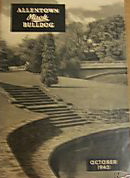
Mack Bulldog Features Boat Landing
The Boat Landing
 Getting to the Boat Landing, for six year old boys who lived above the park in 1953, was quite an adventure. There were three other wonderful WPA structures to navigate on the journey. Unfortunately, poor foresight by a previous park director has erased some of the WPA's monuments in Lehigh Parkway. As the postcard from the mid-50's above shows, the Boat Landing (my name for the structure) was a source of pride for the city and park system. It is located at the end of the park, near Regency Apartments. I use the present tense because remnants of this edifice still exist, buried under dirt and debris. Other attractions lost in that section of the park include the Spring Pond near the Robin Hood parking lot, and the bridge to the "Island", plus the mosaic inlaid benches which were on the island. ( Island halfway between parking lot and boat landing). Neither the Mayor or the Park Director knows that these centerpieces ever existed. These are irreplaceable architectural treasures well worth restoring.
reprinted from May, 2009, combining two posts seeking help to uncover this treasure after 50 years.
Aug 12, 2013
Saving The Spring Pond

As a small boy growing up in the twin homes above Lehigh Parkway, I would go down the steep wooded ravine and cross the Robin Hood Bridge. The stone lined spring pond and miniature bridge was just the first in a series of wonderful WPA constructions to explore. Last year, when I organized the reclamation of the Boat Landing, my memory turned to the pond. Although overgrown with several inches of sod, I knew the treasure was still savable.

In the spring of 2010 I met Mike Gilbert of the Park Department, and pitched the idea of a partial restoration. On May 26th, I posted A Modest Proposal, which outlined my hopes for the pond. By July, Gilbert had the Park Department clear off the remaining stones, and clean up around the miniature bridge.

Park Director Greg Weitzel indicated to me that the pond features uncovered will be maintained. Any further clearing would be at the discretion of Mike Gilbert. In our conversation he also stated that there are virtually no funds available for the preservation of the WPA icons.

I will attempt to organize a group and contributions for this most worthy cause. Between the Spring Pond and The Boat Landing there was once a bridge to the island. Wouldn't it be nice if a small boy could go exploring.
reprinted from previous posts
UPDATE:Mike Gilbert has retired, and the Park Department has a new director. Although grass and sod are starting to again cover the remaining stones that surround the pond, the miniature bridge is still visible. I will make it my mission to again pitch the new personnel.
Aug 11, 2013
Our History Disregarded

One of General Trexler's first land donations to the City of Allentown was some acreage along the Little Lehigh. He wanted to make sure that the quality of the water supply for the city was protected. The above photograph shows one of first things built in Lehigh Parkway. Please note that the retaining walls on the park entrance road have not yet been built. On the previous post Anon 8:49 PM asks;
Has the City showed you the complete inventory and locations of all the WPA sites?
Not to sound too presumptuous, but I believe the current Administration is learning about the WPA sites from this blog, starting with "Stairway To Shame," compiled from two posts written in Sept. 2008. The photo shows the spring pond and ornamental bridge. Although water still comes from the spring pipe, residents today would have a hard time locating this image, although it's in a very prominent place.

The spring pond has been allowed to become overgrown, but the stones lining the pond are for the most part still there, buried under a few inches of dirt and tall grass.

Likewise the bridge is intact, but obscured by high grass. Now, I'm not a fan of the grow zones, high mowing and riparian buffer zones. Giving the advocates of those programs the benefit of the doubt, there can be no justification, whatsoever, for letting our historic treasures be overgrown and buried. The spring pond and bridge is right next to the parking lot in Robin Hood, the City now calls it Hole Number One of the Disc Golf Course. Hopefully the City will have enough consideration for General Trexler to weedwack the bridge, so that a father and his children can have a moment like the one shown at the top of this post.
 reprinted from October 2009
UPDATE: I've had some success with the park department in regard to the Spring Pond site. That story will be the next post.
Aug 9, 2013
The Fountain Of My Youth

Aug 8, 2013
Robin Hood Dam Reprieve

Aug 6, 2013
Allentown Park Crimes

Subscribe to:
Posts (Atom)