Jan 27, 2020

No Damn Molovinsky Letters


Early last week I submitted the following letter to the Morning Call.
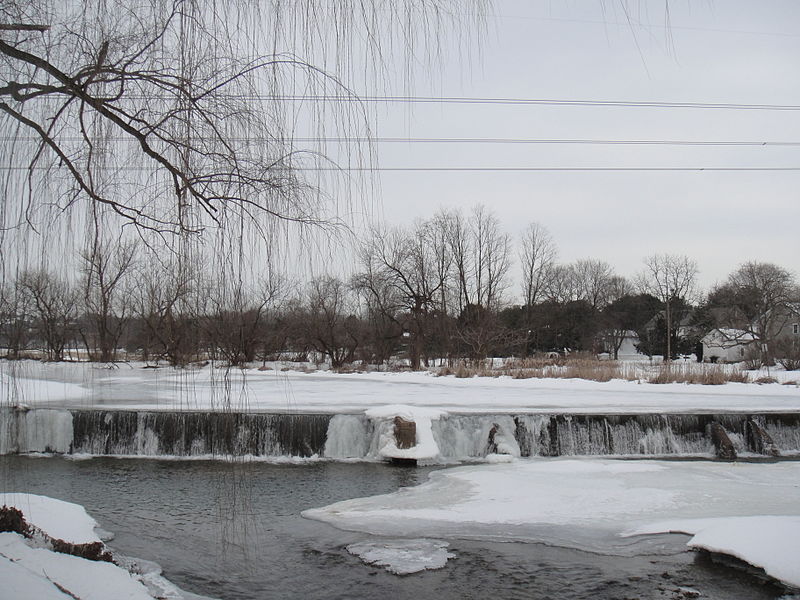
I read with great amusement South Whitehall Commissioner Tori Morgan's statement that placing an Open Space referendum on the ballot is a "fantastic idea". Ms. Morgan permitted the Wildlands Conservancy to contest the condition of Wehr's Dam with the state. That inappropriate interaction has complicated fulfilling the 2016 referendum that was meant to preserve that iconic structure. A referendum doesn't mean much if the elected officials are not sincere about following through with the voter's wishes.                      Michael Molovinsky 
The last letter of mine published by The Morning Call was in October of 2016, prior to the Wehr's Dam referendum. At the time, it took me two weeks to persuade the paper to publish the letter. The letters' editor refused, but I went over his head to the newly appointed publisher assigned by the Tribune Corporation. While the paper solicits self serving public relations patter by our elected and appointed officials, it censures citizen protest.

Jan 24, 2020

J. Molovinsky, Part 3, Wenz Company

This past weekend there was an auction at the former Wenz Company monument factory in the 1900 block of Hamilton Street. This facility has played several parts in Allentown's history, besides having produced thousands of tombstones. Enormous blocks of granite still remain from when it was the last stop on the Quarry Barber railroad branch line. Sculptures remain from the Phil Berman era, when artists used the Wenz equipment for monumental art. lastly, there are hundreds and hundreds of old tombstones, which were replaced over the decades, in local cemeteries with replacement markers. As mentioned in Part 1 of this post series, part of an old tombstone led me to discover my great grandmother's grave on Fountain Hill. That sculpture was made at Wenz, and Jennie Molovinsky's original stone also lies at Wenz's.

My grandfather came to Allentown as a young man in 1891. After working and saving for a number of years, he brought his parents over from the Old Country. The former synagogue on 2nd. Street had just acquired their cemetery off Fullerton Avenue when his mother died. Jewish tradition dictated that a man was the first burial in a new cemetery, so she was buried in an old Jewish Cemetery, on Fountain Hill. Several years later her husband, my great grandfather, was killed while being robbed on Basin Street. He is buried on Fullerton Avenue.

reprinted from June of 2014

Jan 23, 2020

Jennie Molovinsky Was A Quiet Neighbor


For nearly a hundred years the Wenz Memorial Company had a tombstone factory at 20th and Hamilton.  Their parcel extended from Hamilton Street back to Walnut Street, across from the home of former mayor Joe Daddona.   Years ago, large granite slabs would be delivered by railroad, using the the Barber Quarry spur route.  During the Phil Berman era,  the facilities were also used to produce large stone sculptures.  Behind the office and production building, most of the property was used for storage of tombstones.  Some of the stones were samples of their handiwork, and others were old stones that had been replaced with new ones, by family members.  Such was the case with my great grandmother's first stone, which has laid at wenz's for several decades.  The row houses and their front porches on S. Lafayette Street faced this portion of Wenz's, and it was very quiet, indeed.

Some readers may have noticed that Wenz's has been demolished, and the parcel will now contain a bank,  Dunkin Donut, and Woody's Sport Bar.  The residents of Lafayette Street,  experiencing complete quietness for all these years, attended the zoning hearing as objectors.  Their previous view, a dark, quiet lot, would now be replaced with a lit parking lot, with bar patrons coming and going.  Although I will not comment on the zoning issues,  residents were supposedly told by the zoners that the development would improve their quality of life.  It's one thing to have the quality of your life degraded,  it's another to have your intelligence insulted, to boot.  Perhaps the zoners need some training in sensitivity.

reprinted from May of 2016

Jan 22, 2020

Mt. Sinai Cemetery


Jews have been buried in a small section of Fairview Cemetery, called Mt. Sinai, for over 138 years. Although the markings on several stones have worn away, Hannah Dreifuss was buried there in 1868. The September 10th Chronicle in 1875 reported that two members of the Jewish faith, prominent Hamilton Street merchants, Joshua Schnurman and Simon Feldman, purchased a section from Fairview Cemetery and applied for a charter for Mt. Sinai Cemetery, thus creating the first Jewish Institution in Allentown.
Fairview Cemetery itself was not formally laid-out until 1870, when the renowned architectural firm Lathan of Buffalo was hired to create the premiere resting place in the Lehigh Valley. The giants of Allentown would be buried there, among them Harry Trexler, the Lehs, and the Macks of truck fame.
The History Lehigh County, published in 1914, notes Mt. Sinai contained 29 graves. Among them was Julia Wolf, who died in 1907. Her husband Morris served with the local regiment in the Civil War, and lived to be 98 years old. Feldman and Schnurman were among the earliest Jews in Allentown, immigrants from Germany who practiced the modern "Reformed" Judaism. These gentlemen and their extended family members would go on to form the "Young Ladies and Men's Hebrew Society" in 1883, a predecessor to the Keneseth Israel Congregation organized in 1903. Mt. Sinai remained the resting place for Reformed Jews till 1928, when Keneseth Israel established its own cemetery. Burials continued at Mt. Sinai through the 1940's as spouses and passing family members joined those previously departed in family plots. Today there are 78 graves. In July of 2006, thirty years after the previous burial in 1976, Joseph Levine was laid to rest at the age of 103.

Blogger's Notes: Mt. Sinai Cemetery is not affiliated with any synagogue, and with few exceptions, has been unused for 60 years.

reprinted 

Jan 21, 2020

Wave In The NIZ Tide


The Reverend Gregory Edwards contends that his appointment to the NIZ board was blocked by our Harrisburg elected officials, with threats of withholding funds to our fair city. After making the incendiary allegation, he portrays himself as a harmonizer for the city, by withdrawing his nomination. With no evidence for his extortion contention,  his claim is actually corrosive to the city's harmony.

My larger purpose for this post is my amusement at the wokeness of local appointments. Years ago I rented an apartment to someone who had just purchased the former Brass Rail on Hamilton Street. Mayor Pawlowski immediately appointed him to some Hamilton Street board, although this fellow knew absolutely nothing about Hamilton Street or Allentown. Likewise, the new director of the art museum, and the president of Muhlenberg College, who were also newcomers,  were appointed to the NIZ. The artsy one went so far as to say his main criterion for additional appointments was diversity.

Getting back to Edwards, among the qualifications he cited for the NIZ is being on the board of Promise Neighborhood....now that appointment did seem appropriate.

Jan 20, 2020

A Family Story

This post is unusually personal for this blog.  My grandfather came to Allentown from Russian Lithuania  in 1891.  In the next few years he was joined by his parents, and five siblings.   The family settled on 2nd Street, along with many other Jewish immigrants of that period.  He worked in various jobs, including a cigar factory, until he could establish himself as a butcher, as in the old country.  Because we were here for over a hundred years,  I consider myself somewhat of a local historian.

As a boy growing up in Lehigh Lehigh Manor, on the ridge above Lehigh Parkway, I explored the WPA structures when they were still comparatively new.  Because of that background, I was able to uncover the Boat Landing, and advocate for our  traditional park system.  One of my father's uncles worked for the park system, caring for Lehigh Parkway.

What brought me to this post is my great grandmother's tombstone in Fountain Hill, which I recently visited.  She is buried in an old Jewish cemetery that is no longer in use. Although, her tombstone is very old, it replaced an even older one , that then laid behind the former Wentz's tombstone factory at 20th and Hamilton, for many decades.  I am the last Molovinsky in Allentown.

photo taken behind Wentz's before recent demolition of that facility.

reprinted from previous years

Jan 17, 2020

The Corner Market


Although I doubt that there will ever be a show at the Historical Society, or brochures at the Visitors Bureau, perhaps nothing encapsulates the history of Allentown more than the corner grocery stores. Allentown proper, is mostly comprised of rowhouses built between 1870 and 1920, long before the era of automobiles and suburban supermarkets. Most of the corner markets were built as stores, and over the years many were converted into apartments. Up until the late 1940's, there may have been well over a hundred operating in Allentown. Some specialized in ethnic food. The bodega at 9th and Liberty was formally an Italian market. Live and fresh killed chickens were sold at 8th and Linden, currently H & R Block Tax Service. A kosher meat market is now a hair salon on 19th Street. The original era for these markets died with the advent of the supermarket. In the early 50's some corner stores attempted to "brand" themselves as a "chain", as shown in the Economy Store sign above. That market is at 4th and Turner, and has been continually operating since the turn of the last century. Ironically, as the social-economic level of center city has decreased, the corner stores have seen a revival. Most of these new merchants, many Hispanic and some Asian, know little of the former history of their stores, but like their predecessors, work long, hard hours.

ADDENDUM: The above post is reprinted from 2012.  The sign shown above has been removed or sold. When my parents were first married they lived next door and would patronize the same store.  My grandparents lived nearby on the corner of Chew and Jordan Streets.

ADDENDUM 2: the Economy Stores sign shown, apparently came from an early A&P format in 1912 when they leased small stores. If this particular store was such an A&P, or just dressed later with a reused sign, I have yet to determine.

Jan 16, 2020

The Sunday Ride


My family wasn't much for recreation.  My father worked six days a week, from early morning until early evening.  We did go for a long car ride on Sundays.  Back then gasoline was cheap, and having no destination wasn't thought of as wasteful.  Children were more content to sit in the back seat and look out the window, now they want a video screen in the vehicle.


Even children's play then involved more imagination and interaction.  Howdy Doody was just a puppet on strings,who spend most of his time talking to an adult, Buffalo Bob, can you imagine?


 Sitting in that back seat in the mid fifties, I might well had


my "coonskin" hat with me.  Fess Parker was a genuine American hero.  It mattered little if he played both Davy Crockett and Daniel Boone, both were king of the wild frontier.  The ride probably lasted for two hours and then we would go to a restaurant to eat dinner.  Compared to now, there were very few restaurants.


My mother would cook all the other meals that week, and we probably ate out more than most.  Supermarkets were the new rage in food shopping, but the butcher, baker and candle stick maker were still going strong.  If my father headed west or south, chances are we ended up at Shankweiler's Hotel, famous for chicken and waffles.   They were at the intersection of Old 22 and Route 100.  The building still exists and currently is a bank.  The family also owned another hotel on Route 309.  Both locations also operated adjoining Drive-In movies.


If my father headed north or east,  we would end up at Walp's, which was on the corner of Union Blvd. and Airport Road.  Walp's was a much more urban place.   While Shankweiler's was an old country inn,  Walp's was built as a modern restaurant.  I enjoyed those rides, they were a learning experience.


reprinted from previous years